


Stadium Seats for European Sports Venues
Stadium Seats Europe
Stadium seats are one of the most important elements of every sports venue, football stadium, arena, grandstand and public spectator facility. They are not simply plastic chairs fixed to concrete steps. They are part of the matchday experience, the safety planning, the visual identity of the venue and the long-term investment value of the project. A good stadium seat must be durable, comfortable, easy to install, resistant to outdoor conditions and suitable for heavy public use.
Across Europe, sports clubs, municipalities, contractors, architects and stadium operators need seating solutions that can perform reliably for many years. Whether the project is a new football stadium, a renovated municipal arena, a school sports facility, a basketball hall, a multi-purpose grandstand or a training complex, the correct stadium seat selection affects both the users and the facility owner.
For buyers, the challenge is clear. The seat must look good, comply with the project requirements, fit the existing step dimensions, resist sunlight and weather, support crowd movement, allow numbering and be supplied at a reasonable price. In other words, the best stadium seating solution is not the cheapest product and not necessarily the most expensive one. It is the product that provides the strongest price-quality balance for the project.
This blog explains how to choose stadium seats for European sports venues, what makes a stadium seat reliable, which seating types are used in different projects and why professional buyers should evaluate quality, durability, cost and supplier reliability together.
Why Stadium Seats Matter in Sports Venue Projects
A stadium seat is used by thousands of people over many years. It must withstand constant sitting, standing, impact, cleaning, weather conditions and public use. In football stadiums and open arenas, seats are exposed to sunlight, rain, temperature changes and crowd movement. In indoor arenas, they may still face heavy use, cleaning chemicals, abrasion and repeated installation stress.
Because of this, stadium seating should never be treated as a simple accessory. A poorly selected seat can create many problems after installation. It may fade quickly under sunlight, crack in cold weather, become loose on the step, feel uncomfortable to spectators or damage the visual appearance of the stadium. In contrast, a high-quality seat can support the venue’s image, improve spectator comfort and reduce long-term maintenance costs.
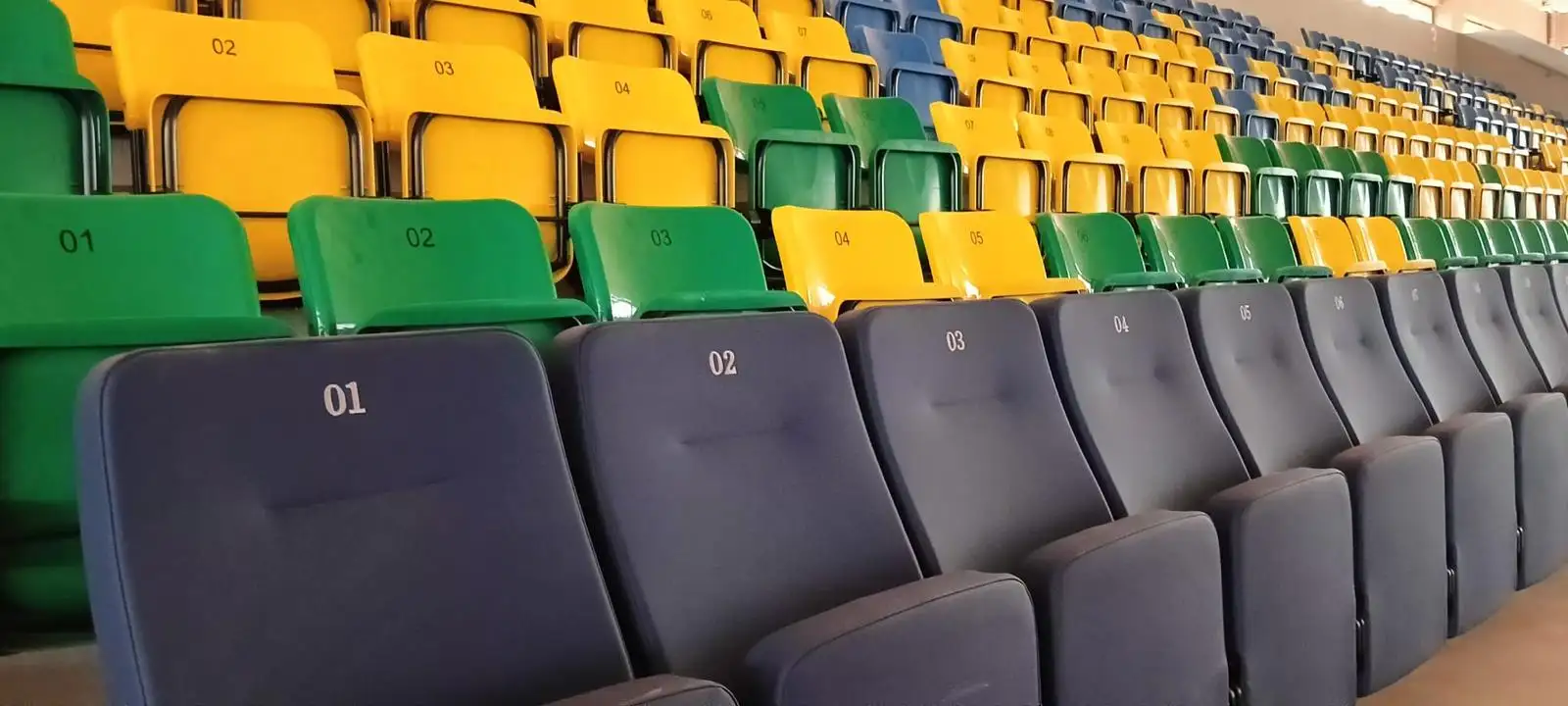
For sports clubs and municipalities, stadium seats are also part of the public identity of the venue. The colour pattern, club colours, seat layout and numbering system all contribute to the atmosphere of the stadium. A well-planned seating system can make the venue look organized, modern and professional even before the event begins.
Stadium Seats for European Projects
European stadium projects often require a practical balance between technical performance, safety expectations, visual quality and budget control. Stadium owners need seats that can handle heavy use, but they also need pricing that makes sense for large quantities. Since stadium projects may involve hundreds, thousands or tens of thousands of seats, the difference between a weak product and a durable product becomes very important over time.
For European buyers, several factors are especially important:
Outdoor durability
UV resistance
Strong polypropylene or suitable plastic material
Stable installation on concrete or metal structures
Flame-retardant options when required
Comfortable sitting form
Easy cleaning
Seat and row numbering
Colour options according to club identity
Fast and organized project supply
Reasonable price-quality balance
Reliable communication with the supplier
A stadium seat for Europe should not only be attractive in a catalogue. It must be suitable for real stadium conditions. Buyers should ask for technical details, material information, installation options and project references before making a final decision.
What Makes a Stadium Seat High Quality?
The quality of a stadium seat depends on several technical and practical details. From the outside, many plastic seats may look similar. However, their performance can be very different after years of use. A high-quality stadium seat is the result of correct material selection, proper design, strong production control and suitable installation planning.
The main quality factors include:
Material quality:
Most stadium seats are produced from polypropylene, often known as PP. Good-quality PP provides strength, flexibility and resistance to everyday use. The raw material quality has a direct effect on the seat’s durability.
UV resistance:
Outdoor stadium seats are exposed to sunlight for long periods. UV resistance helps reduce colour fading, surface ageing and material weakening. For European stadiums with open-air conditions, this is a critical feature.
Impact resistance:
Stadium seats may be exposed to sudden force, crowd movement or accidental impact. A good seat should resist cracking and deformation under normal public use conditions.
Ergonomic shape:
Even in high-capacity stadiums, spectators may sit for long matches or events. The seat form should provide basic comfort without wasting unnecessary space.
Installation stability:
The seat must be fixed securely to the step, riser or metal structure. Weak fixing points can create noise, movement and safety concerns.
Colour stability:
Club colours and stadium patterns should remain visually strong over time. Poor material or weak pigments can cause early fading.
Maintenance simplicity:
Stadium seats should be easy to clean, inspect and replace if necessary. Public venues need practical maintenance solutions.
A stadium seat that performs well in all these areas can offer long-term value for the owner.
Plastic Stadium Seats
Plastic stadium seats are the most widely used seating solution for football stadiums, arenas and public grandstands. They are practical, cost-effective and suitable for large quantities. When produced with good materials and proper design, plastic stadium seats can provide excellent durability for both outdoor and indoor sports venues.
Plastic stadium seats are commonly preferred because they offer:
Competitive pricing for large projects
Good resistance to public use
Various colour options
Easy cleaning
Fast installation
Lightweight structure
UV-resistant options
Flame-retardant options depending on project needs
Suitable forms for different step dimensions
In European projects, plastic stadium seats are often used in football stadiums, municipal sports facilities, school stadiums, athletics tracks, tennis courts and multi-purpose arenas. They can be produced in different shapes, from simple monoblock models to more ergonomic spectator seats.
The most important point is to avoid low-quality plastic materials. A weak plastic seat may become brittle, fade quickly or break under impact. For long-term stadium use, the material and production quality must be carefully evaluated.
Fixed Stadium Seats
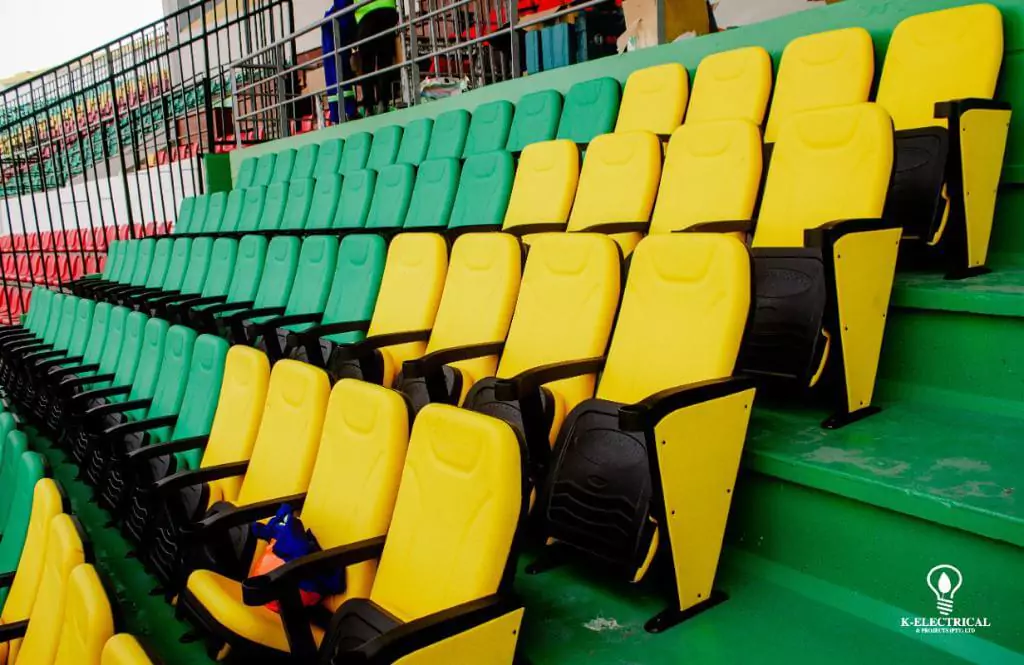
Fixed stadium seats are mounted directly to the concrete step, riser or metal support structure. They are usually simple, durable and cost-effective. Fixed seats are often preferred in high-capacity areas where budget, easy installation and long-term durability are priorities.
Fixed stadium seats can be ideal for:
Football stadiums
Training facilities
Municipal sports venues
School stadiums
Outdoor grandstands
General spectator areas
Large-capacity tribunes
These seats are usually designed with a compact structure to maximize capacity. They may have a backrest, drainage holes, numbering options and different fixing methods depending on the project. For outdoor use, UV-resistant material is strongly recommended.
The advantage of fixed stadium seats is their simplicity. Fewer moving parts usually mean easier maintenance. If the material and fixing method are correct, fixed seats can serve reliably for many years.
Folding Stadium Seats
Folding stadium seats, also called tip-up stadium seats, are used when more circulation space is required between rows. The seat pan folds upward when not in use, creating more space for spectators to pass. This is especially useful in modern stadiums, arenas and VIP areas where comfort and movement are important.
Folding stadium seats are commonly used in:
Football stadiums
Modern arenas
VIP tribunes
Press areas
Renovated stadium sections
Indoor sports halls
Multi-purpose venues
Premium spectator zones
The main advantage of folding stadium seats is space efficiency. They allow better movement between rows and can improve the overall user experience. However, the folding mechanism must be strong, quiet and suitable for heavy public use. Weak mechanisms can become noisy, loose or difficult to maintain.
For European stadium projects, folding stadium seats should be evaluated according to row spacing, step depth, fixing method and expected usage intensity.
Blow Molded Stadium Seats
Blow molded stadium seats are another practical option for sports venues. They are often designed as strong, hollow plastic structures with good durability and impact resistance. These seats may be preferred in projects where robust construction and outdoor performance are important.
Blow molded seats can provide:
Good strength
Comfortable form
Outdoor suitability
Competitive pricing
Easy cleaning
Durable structure
Various colour options
They can be used in football stadiums, arenas, grandstands and sports complexes. As with all stadium seating products, the quality of raw material, UV protection and installation method should be checked carefully.
VIP Stadium Seats
VIP stadium seats are designed for premium spectator areas, protocol sections, hospitality lounges and executive tribunes. These seats offer more comfort and a more refined appearance than standard plastic seats. They may include upholstered surfaces, wider forms, armrests, cup holders, higher backs or folding mechanisms depending on the model.
VIP stadium seats are important because they represent the highest-value areas of a stadium. Sponsors, executives, guests, club officials and premium ticket holders usually sit in these zones. The seating must reflect the value of the area.
VIP stadium seats should offer:
Better comfort
Premium appearance
Durable upholstery options
Strong frame and mechanism
Armrest options
Cup holder options
Suitable colours for the project
Easy maintenance
Professional installation
Long-term reliability
For European stadiums and arenas, VIP seating can create an important revenue category. Hospitality areas, executive boxes and premium tribunes often require a more comfortable and visually impressive seating solution.
Press and Media Tribune Seating
Modern stadiums require dedicated areas for journalists, commentators and media teams. Press seating is different from standard spectator seating because it often includes writing tables, power access planning, wider spacing and clear views of the pitch.
Press seats must be practical and comfortable for longer use. Media professionals may sit for long periods before, during and after the match. Therefore, the seat should support working conditions, not only spectating.
A good press seating area may include:
Comfortable seat structure
Writing desk or press table
Clear field visibility
Cable and device planning
Numbering
Stable installation
Easy access
Durable materials
Press tribune seating must be coordinated with the architectural and technical requirements of the stadium.
Substitute Player Seats and Team Benches
Stadium seating projects may also include substitute player seats, dugout seats and team shelters. These products are different from standard spectator seats. They are used by players, coaches and technical staff during matches.
Substitute player seats should provide comfort, protection and visibility. They may be designed as individual upholstered seats, bench systems or integrated shelter structures. The shelter must protect users from rain, wind and sunlight while maintaining clear visibility of the pitch.
For clubs and sports facilities, substitute player shelters should be durable, safe and compatible with the stadium’s design.
UV Resistance in Stadium Seats
UV resistance is one of the most important features for outdoor stadium seats. Seats exposed to sunlight for years can fade, weaken or become brittle if the plastic is not properly protected. This is especially important in open stadiums, football grounds and sports facilities with high sun exposure.
UV-resistant stadium seats help maintain:
Colour stability
Surface quality
Material durability
Longer service life
Better stadium appearance
Lower replacement costs
In Europe, UV exposure varies by region. A stadium in Southern Europe may experience stronger sunlight than a stadium in Northern Europe, but UV resistance is still valuable for all outdoor venues. Even in cooler climates, long-term exposure can affect plastic materials.
When buying stadium seats, project owners should ask whether UV-resistant options are available and whether the material is suitable for outdoor use.
Flame-Retardant Options for Stadium Seats
Some stadium and arena projects require flame-retardant seating options depending on the project specification, local regulations or venue type. Flame-retardant requirements may vary between countries and projects. Therefore, buyers should always check the exact technical specification before ordering.
For stadium seats, flame-retardant options can be important in:
Indoor arenas
Covered stadiums
High-capacity public venues
Event halls
Multi-purpose sports facilities
Projects with strict fire safety requirements
A responsible supplier should not make vague or unsupported claims. The correct approach is to evaluate the project requirement and offer suitable material options when needed.
Colour Options and Stadium Identity
Stadium seats play a major role in the visual identity of the venue. Club colours, national colours, sponsor patterns, logo effects and seating mosaics can all be created through seat colour planning. Even when the stadium is empty, the seating pattern can make the venue look impressive.
Colour planning may include:
Single-colour seating
Club colour combinations
Random mixed patterns
Logo or text designs
Section-based colour differences
VIP area colour separation
Neutral colour schemes for multi-purpose venues
For football clubs, colour is emotional. The stadium seat is part of the club identity. For municipalities, colours may represent the city or public institution. For arenas, the seating scheme may need to be neutral enough for different events.
High-quality pigmentation and UV resistance are important because the colour must remain strong over time. A stadium that looks fresh after installation but fades quickly will lose visual quality.
Seat and Row Numbering
Seat and row numbering is essential for professional stadium operation. It helps spectators find their places, supports ticketing systems and improves crowd management. Numbering can be applied in different ways depending on the seat model and project preference.
Common numbering options include:
Seat number plates
Row number plates
Engraved numbering
Sticker-based numbering
Plastic or metal tags
Numbering on the backrest
Numbering on the seat pan
Side-mounted row numbers
The best option depends on the stadium layout, cleaning routine, seat model and visibility requirements. Numbering should be durable, readable and positioned where spectators can easily see it.
Installation Methods
Stadium seats can be installed on different surfaces depending on the venue structure. The most common installation methods include floor mounting, riser mounting and mounting on metal support systems.
The correct installation method depends on:
Step depth
Step height
Concrete quality
Riser position
Row spacing
Seat model
Aisle planning
Existing structure
Indoor or outdoor use
Project specification
Before selecting a stadium seat, buyers should check whether the model is suitable for the venue’s step dimensions. If possible, technical drawings or DWG files should be shared with the supplier. This helps prevent installation problems and ensures that the seating layout works correctly.
A good supplier should be able to advise on fixing methods, recommended dimensions and installation suitability.
Stadium Seating for Renovation Projects
Many stadium seating projects in Europe involve renovation rather than completely new construction. Existing stadiums may need old seats removed, new seating installed, colours updated or VIP sections upgraded. Renovation projects require careful planning because the existing structure may limit available options.
In stadium renovation projects, buyers should evaluate:
Existing step dimensions
Condition of concrete steps
Old fixing holes
Target capacity
Aisle positions
Emergency exit routes
Seat colour design
Numbering system
Installation schedule
Match calendar
Packaging and storage area
Replacement seat strategy
Renovation projects are often time-sensitive. Clubs may need installation between seasons or during short breaks. Therefore, production and delivery planning must be realistic.
A well-managed seating renovation can modernize the stadium quickly and improve the spectator experience without rebuilding the entire venue.
Stadium Seating for New Projects
New stadium projects allow more freedom in seating layout. Architects and project owners can plan step dimensions, row spacing, VIP zones, press areas and spectator circulation with the selected seating system in mind.
For new projects, stadium seats should be evaluated early in the design process. This helps optimize capacity, comfort and installation. If seat selection is left too late, the project may face design limitations or costly adjustments.
In new stadium projects, the supplier can support:
Seat model selection
Colour planning
VIP seating strategy
Press seating solutions
Numbering options
Technical drawings
Packaging planning
Delivery schedule
Installation coordination
Spare part planning
The earlier the seating strategy is defined, the better the final result will be.
Stadium Seats for Football Clubs
Football clubs need stadium seats that represent their identity and serve supporters reliably. The seat must be strong enough for passionate matchday environments and visually aligned with club colours.
For football clubs, important priorities include:
Durability
Club colour matching
Comfort
Easy cleaning
Safe fixing
UV resistance
Seat numbering
Fast replacement if damaged
VIP and protocol options
Long-term supplier support
Football stadiums also have emotional value. The seating pattern can display club colours, slogans or visual identity. A well-designed seating layout can strengthen the atmosphere even before the stadium is full.
Stadium Seats for Municipal Sports Facilities
Municipalities and public institutions often need stadium seats for local stadiums, sports halls, school facilities and community arenas. These projects require reliable products at reasonable prices. Public budgets must be used carefully, so the seating solution should offer long-term value.
For municipal projects, key needs include:
Cost-effective seating
Durable material
Easy maintenance
Simple installation
Safe public use
Weather resistance
Clear numbering
Suitable delivery planning
Long service life
A good stadium seat for municipal use should be practical, not overly complicated and strong enough for frequent public use.
Stadium Seats for Arenas and Multi-Purpose Venues
Arenas and multi-purpose venues host different events such as basketball, volleyball, concerts, ceremonies and indoor sports competitions. Seating in these venues must be flexible in terms of design and durable in terms of use.
Indoor arenas may use fixed seats, folding seats, upholstered seats or VIP seating depending on the section. The seat must support different event types and audience profiles.
For arenas, important factors include:
Comfort
Fire safety requirements
Easy cleaning
Durability
Good visibility
Compact design
VIP options
Numbering
Colour coordination
Installation quality
Arenas often need a more refined appearance than outdoor municipal grandstands. Therefore, design and finishing quality become more important.
Stadium Seats for Schools and Universities
Schools, universities and campus sports facilities also need stadium seating solutions. These projects usually require durable, affordable and easy-to-maintain seats. Since educational institutions may have limited budgets, price-quality balance is very important.
Stadium seats for schools and universities should be:
Durable
Safe
Easy to clean
Cost-effective
Suitable for outdoor or indoor use
Available in school colours
Simple to install
Reliable for long-term use
These facilities may not require the most premium stadium seat model, but they should still avoid weak materials that will need replacement too soon.
Supplier Reliability in Stadium Seating Projects
Choosing a stadium seating supplier is not only about choosing a seat model. The supplier must understand the full project process. Large stadium seating orders require correct production planning, packaging, logistics, documentation and technical communication.
A reliable supplier should provide:
Clear product information
Technical drawings when needed
Material and colour options
Honest delivery planning
Project-based communication
Safe packaging
Export experience
Support during installation planning
Spare part availability
After-sales communication
For European buyers, supplier reliability is a major decision factor. A delayed shipment, unclear technical detail or incorrect seat configuration can create serious project problems. The best supplier is one that combines production capability with clear and responsible communication.
Why Price Alone Should Not Decide the Project
Stadium seating projects often involve large quantities, so price has a strong influence. However, choosing the lowest price without checking quality can become expensive later. Weak seats may break, fade, become loose or require early replacement. Installation issues can also increase labour costs.
Instead of focusing only on unit price, buyers should evaluate total value. A slightly better seat may save money over time by reducing maintenance, improving appearance and lasting longer.
The real cost of stadium seating includes:
Product price
Transport cost
Installation cost
Maintenance cost
Replacement cost
Cleaning effort
User satisfaction
Venue appearance
Operational reliability
A good price-quality balance protects the project budget while still delivering a strong long-term result.
What Buyers Should Ask Before Ordering Stadium Seats
Before ordering stadium seats, professional buyers should ask the following questions:
Is the seat suitable for outdoor or indoor use?
Is the material UV resistant?
Is the seat produced from good-quality polypropylene or another suitable material?
Can flame-retardant options be offered if the project requires them?
Is the seat fixed or folding?
What installation method is recommended?
Is the model suitable for the existing step dimensions?
Can seat and row numbering be applied?
Which colours are available?
Can club colour patterns be planned?
Is the seat easy to clean and maintain?
How are the seats packaged?
What is the production and delivery schedule?
Are spare parts available?
Does the supplier have experience with stadium projects?
These questions help buyers avoid problems and compare suppliers more accurately.
The Ideal Stadium Seat for Europe
The ideal stadium seat for European projects should combine technical durability, spectator comfort, visual quality and reasonable pricing. It should be strong enough for public use, resistant to outdoor conditions and suitable for the project’s installation structure.
A good stadium seat should offer:
Durable material
UV-resistant option
Comfortable sitting form
Stable fixing points
Easy cleaning
Colour options
Numbering compatibility
Fixed or folding alternatives
Suitable design for football stadiums and arenas
Reliable supply
Fair price-quality balance
Long service life
No single model is perfect for every project. The correct choice depends on the venue type, capacity, budget, climate, installation structure and design expectations.
Stadium Seating as a Long-Term Investment
Stadium seats remain in use for many years. They are exposed to thousands of spectators, changing weather, cleaning processes and event pressure. Therefore, they should be considered a long-term investment rather than a short-term purchase.
A good stadium seating system can:
Improve spectator comfort
Strengthen the venue’s visual identity
Reduce maintenance needs
Support safe and organized seating
Improve ticketing and numbering
Make the stadium look modern
Protect the owner’s investment
Support club and sponsor image
A poor seating choice can create the opposite result. It can make the venue look old, cause maintenance issues and create additional costs.
Product and Project Positioning
For sports clubs, municipalities, contractors and venue owners looking for stadium seats in Europe, the most important goal is to find a supplier that can combine quality, affordability and reliability. Stadium seating must be technically suitable, visually strong and commercially sensible.
Whether the project requires plastic stadium seats, folding stadium seats, VIP stadium seats, press seating or substitute player seats, the supplier should understand the project as a whole. The seat must fit the venue, the budget and the long-term use conditions.
To review stadium seating solutions for European projects, please click here.
Conclusion: Durable Stadium Seats for European Sports Venues
Stadium seats are a central part of every sports venue. They affect comfort, safety, appearance, maintenance and long-term project value. For European stadiums, arenas, football clubs, municipal sports facilities and multi-purpose venues, the right seating solution must offer durability, UV resistance, easy installation, practical maintenance and strong price-quality balance.
A professional stadium seat should not be judged only by its first appearance. Material quality, fixing strength, outdoor resistance, colour stability, numbering options and supplier reliability must all be considered. For large projects, these details make a major difference over time.
As sports venues continue to modernize across Europe, demand for reliable stadium seating will continue to grow. Buyers need suppliers who can provide strong products, fair pricing and clear project communication. The best stadium seating solution is the one that serves spectators comfortably, supports the venue’s identity and protects the owner’s investment for many years.